
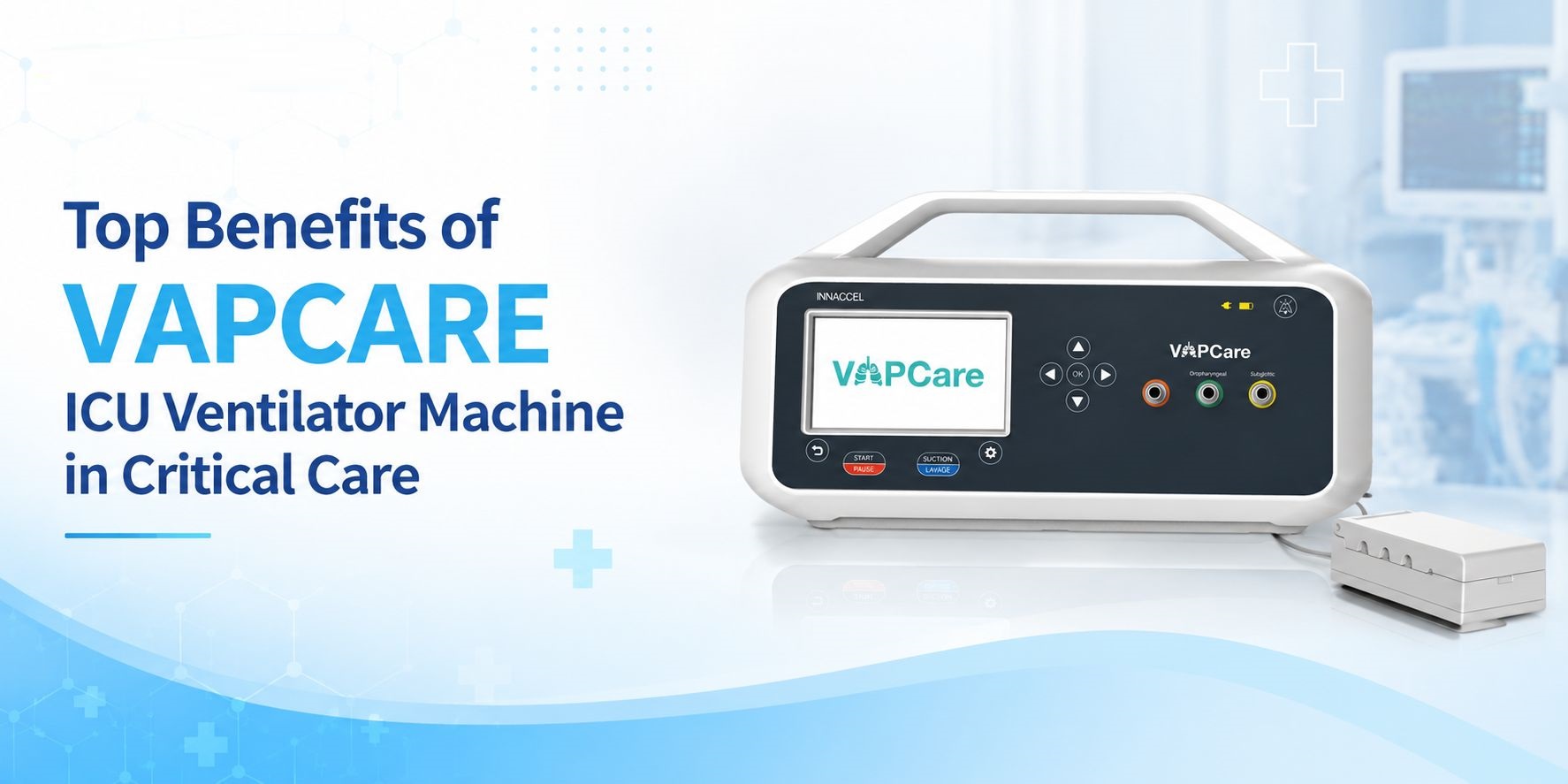
Critical care units handle patients who need advanced respiratory support, continuous monitoring, and strict infection-control practices. In such high-risk environments, every device used around ventilated patients plays an important role in improving safety, hygiene, and care efficiency. VAPCARE is designed to support patients who are on an ICU Ventilator Machine by helping manage oral hygiene and secretion clearance in a more automated and consistent way.
Ventilated patients often require regular airway care because they cannot clear secretions naturally. Poor oral hygiene and secretion buildup can increase the risk of infection, including Ventilator-Associated Pneumonia. This is where VAPCARE becomes an important support system in critical care.
What Is VAPCARE?
VAPCARE is an automated secretion management and oral hygiene system used for ventilated ICU patients. It works along with an ICU Ventilator Machine to support better care for patients who are on mechanical ventilation. The system helps manage oral secretions, supports hygiene protocols, and reduces the dependency on repeated manual intervention.
In busy ICUs, manual oral care and suctioning may sometimes vary because of staff workload, emergency cases, and patient condition. VAPCARE helps bring more consistency to this process by automating important hygiene-related tasks.
1. Helps Reduce the Risk of Ventilator-Associated Pneumonia
One of the major benefits of VAPCARE is its role in reducing the risk of Ventilator-Associated Pneumonia, commonly known as VAP. Patients connected to an ICU Ventilator Machine are more vulnerable to infections because of prolonged ventilation, reduced natural airway clearance, and secretion accumulation.
VAPCARE supports regular oral hygiene and secretion clearance, which helps reduce the chances of bacterial growth in the oral and airway regions. This makes it a valuable solution for hospitals that want to strengthen infection-prevention practices in critical care units.
2. Supports Automated Secretion Management
Ventilated patients often develop secretions in the mouth, throat, and airway region. If these secretions are not removed properly, they may lead to discomfort, airway blockage, and infection-related complications.
VAPCARE helps automate secretion management for patients using an ICU Ventilator Machine. This reduces the need for frequent manual suctioning and supports better airway hygiene. Automated secretion clearance also helps ICU teams provide more structured and reliable care.
3. Improves Oral Hygiene in Ventilated Patients
Oral hygiene is an important part of ventilated patient care. Since ICU patients on mechanical ventilation cannot maintain oral cleanliness on their own, they need regular oral care from healthcare staff.
VAPCARE helps improve oral hygiene by supporting automated oral cleaning and secretion removal. For patients connected to an ICU Ventilator Machine, this can help reduce infection risk and support better overall patient care.
4. Helps Maintain Consistent ICU Care Protocols
In critical care, consistency is extremely important. Manual suctioning and oral hygiene can sometimes become irregular because ICU staff have to manage multiple critical responsibilities at the same time.
VAPCARE helps maintain better compliance with hygiene and secretion management protocols. When used with an ICU Ventilator Machine, it supports a more standardized care approach and helps reduce variation in manual practices.
5. Reduces Manual Workload for ICU Staff
ICU teams are responsible for monitoring vitals, managing medication, handling emergencies, checking equipment, and providing continuous bedside care. Repeated manual suctioning and oral hygiene can increase workload and take up valuable time.
VAPCARE helps reduce repetitive manual tasks by automating secretion clearance and oral hygiene support. This allows ICU staff to focus more on critical patient care and clinical decision-making.
6. Reduces Bedside Time and Patient-Caregiver Interaction
In critical care environments, reducing unnecessary bedside interaction can improve workflow and lower exposure risk for healthcare professionals. This is especially important in infectious disease cases or high-pressure ICU settings.
VAPCARE helps reduce frequent manual intervention for patients on an ICU Ventilator Machine. By automating hygiene-related tasks, it can help reduce bedside time and make ICU operations more efficient.
7. Useful for Long-Term Ventilated Patients
Patients who remain on mechanical ventilation for more than 24 hours require continuous hygiene and secretion management. Long-term ventilated patients are at higher risk of secretion buildup and infection-related complications.
VAPCARE is especially useful for such patients because it provides regular and automated hygiene support. For hospitals managing long-term ICU Ventilator Machine patients, VAPCARE can help improve care consistency and reduce manual dependency.
8. Supports Better Patient Safety
Patient safety is one of the top priorities in every ICU. Improper suctioning, irregular oral hygiene, or unmanaged secretions can increase the risk of complications.
VAPCARE supports controlled secretion management and helps reduce risks linked with inconsistent manual care. When used with an ICU Ventilator Machine, it helps create a safer and more reliable care environment for critically ill patients.
9. Customizable Care Based on Patient Condition
Every ICU patient has different care requirements. Some patients may need frequent secretion clearance, while others may require a more controlled hygiene routine.
VAPCARE allows care settings to be adjusted according to patient condition. This helps ICU teams provide more personalized support for ventilated patients and align hygiene protocols with clinical needs.
10. Improves ICU Efficiency
Modern ICUs need smart systems that save time, reduce workload, and improve patient-care quality. VAPCARE supports ICU efficiency by automating important oral hygiene and secretion management tasks.
For hospitals, this means better workflow, reduced manual effort, and more consistent care for patients who are on an ICU Ventilator Machine. This can be especially useful in busy critical-care units where staff time and patient safety are both important.
11. Supports Better Infection-Control Practices
Infection control is a key part of ICU management. Ventilated patients are more vulnerable to infections because of prolonged hospital stays, artificial airway support, and reduced immunity.
VAPCARE helps strengthen infection-control practices by supporting regular oral hygiene and secretion clearance. This makes it a valuable support system for hospitals that want to improve critical-care hygiene standards.
12. A Valuable Support System for Modern Critical Care
Critical care is moving toward smarter, safer, and more automated patient-care solutions. VAPCARE brings automation into ventilated patient hygiene and secretion management.
When used along with an ICU Ventilator Machine, VAPCARE helps improve patient care, reduce manual workload, support infection prevention, and enhance ICU workflow. It is a useful addition for hospitals that want better care consistency for ventilated patients.
Conclusion
VAPCARE plays an important role in improving care for ventilated ICU patients. It helps manage oral hygiene, supports secretion clearance, reduces manual workload, improves protocol compliance, and helps lower the risk of Ventilator-Associated Pneumonia.
For hospitals, ICUs, and critical-care centers, VAPCARE can be a valuable system to support safer, cleaner, and more efficient ventilated patient care. When combined with an ICU Ventilator Machine, it helps create a more reliable critical-care environment for patients who need continuous respiratory support.


