
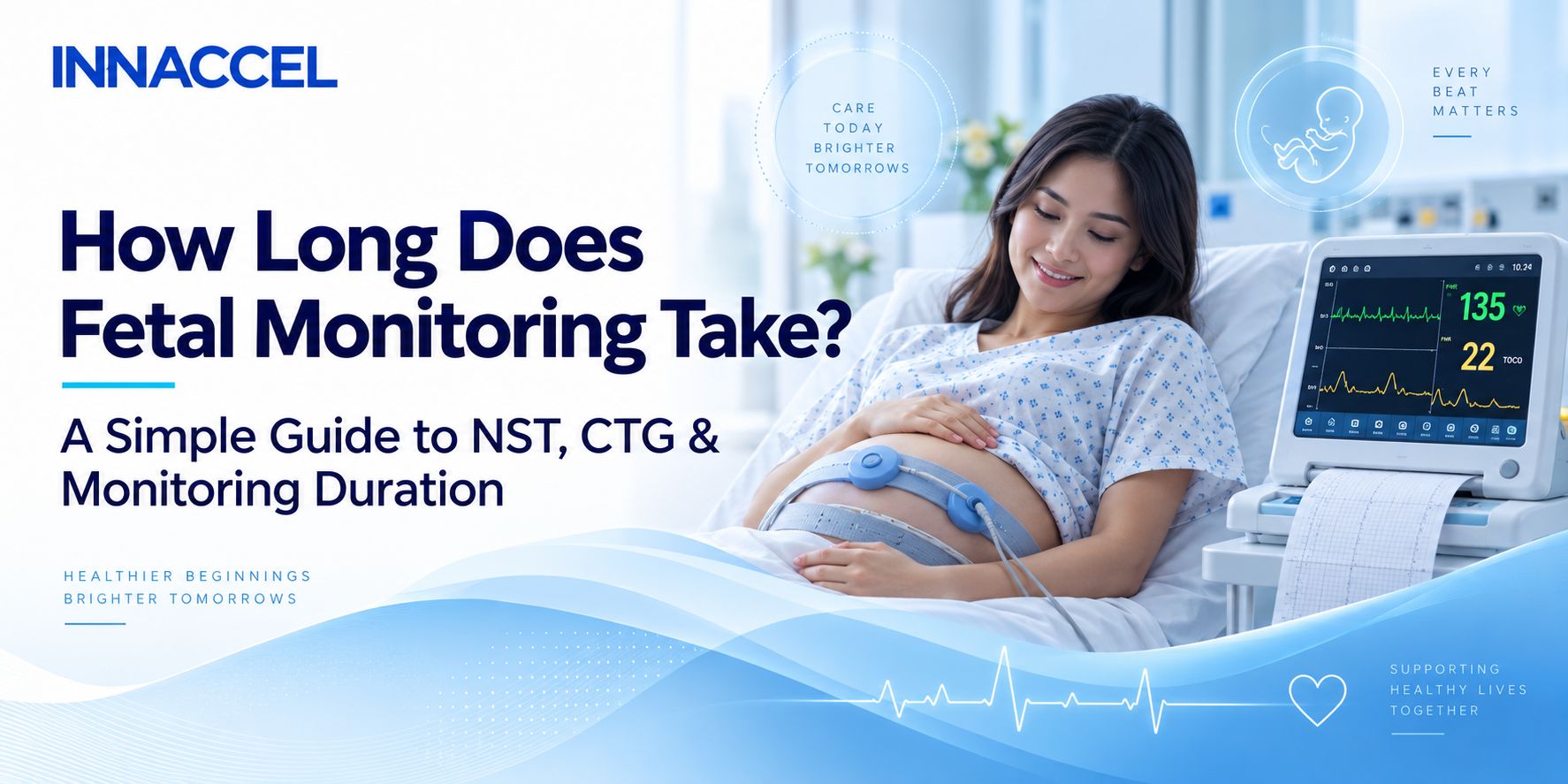
Fetal monitoring helps healthcare professionals assess a baby’s heart rate and, in some cases, uterine contractions during pregnancy and labor. It can provide valuable information about fetal well-being and help clinicians identify changes that may require closer observation.
A common question among expectant parents is: how long does fetal monitoring take? The answer depends on the type of monitoring being performed, the stage of pregnancy, the baby’s activity, and the mother’s clinical condition.
How Long Does Fetal Monitoring Take?
For a routine prenatal nonstress test (NST), fetal monitoring commonly takes around 20 to 40 minutes. During this period, healthcare professionals monitor the baby’s heart rate and observe how it changes with fetal movement.
Sometimes, the monitoring period may need to be extended. For example, if the baby is sleeping or there is not enough movement during the initial monitoring period, the healthcare provider may continue the test to obtain sufficient information.
Fetal monitoring during labor is different. Depending on the pregnancy and clinical circumstances, monitoring may be intermittent or continuous throughout part or all of labor.
What Is Fetal Monitoring?
Fetal monitoring is used to assess fetal heart rate and understand how the baby is responding during pregnancy or labor.
Depending on the monitoring method and equipment, clinicians may track:
- Fetal heart rate
- Maternal heart rate
- Uterine activity or contractions
- Changes in fetal heart rate associated with movement or contractions
These measurements help healthcare professionals evaluate fetal well-being and determine whether additional assessment is necessary.
What Happens During a Nonstress Test?
A nonstress test is a commonly used form of fetal monitoring during pregnancy.
During a traditional NST, sensors are placed on the mother’s abdomen to monitor the baby’s heart rate and uterine activity. The healthcare team observes whether the fetal heart rate responds appropriately when the baby moves.
The test itself is non-invasive and generally requires the mother to remain comfortably seated or reclined while monitoring takes place.
Why Can Fetal Monitoring Take Longer Than Expected?
Although many prenatal monitoring sessions are completed within 20 to 40 minutes, several factors can affect the duration.
Baby’s Sleep Cycle
Babies naturally have periods of activity and sleep. If the baby is resting during the test, clinicians may need to monitor for a longer period.
Fetal Movement
Healthcare professionals may need enough fetal movement to properly assess changes in heart rate patterns.
Pregnancy Risk Factors
Pregnancies requiring closer observation may involve longer or more frequent monitoring sessions.
Monitoring Results
If the initial tracing does not provide enough information, additional monitoring or other assessments may be recommended by the healthcare provider.
How Long Does Fetal Monitoring Take During Labor?
Fetal monitoring during labor does not have one fixed duration.
Some women may have their baby’s heart rate checked periodically, while others may require continuous electronic fetal monitoring. Continuous monitoring can remain in place for several hours or throughout labor depending on maternal and fetal clinical requirements.
The healthcare team determines the appropriate monitoring approach based on factors such as pregnancy risk, labor progression, medications, and fetal heart rate patterns.
Modern Technology in Fetal Monitoring
Advances in medical technology are making fetal monitoring more portable and digitally connected.
Fetal Lite by InnAccel Technologies is a portable and wireless fetal monitoring solution designed to support maternal and fetal monitoring. Depending on the configuration, the system can monitor fetal heart rate, maternal heart rate, and uterine activity.
Fetal Lite is available in different configurations. Fetal Lite NST CTG uses traditional Doppler-based fetal heart rate and TOCO probes and is indicated for monitoring after 24 weeks of gestation. Fetal Lite SU uses ECG/EMG signal extraction through a single probe and is indicated after 36 weeks of pregnancy.
Its wireless and portable design, digital data capabilities, and monitoring tools are intended to support healthcare professionals across appropriate clinical settings.
Healthcare providers looking for a modern fetal monitoring system such as Fetal Lite can explore its features and configurations according to their clinical monitoring requirements.
Is Fetal Monitoring Safe?
External fetal monitoring is generally considered a non-invasive method of observing fetal heart rate and uterine activity. The appropriate type and duration of monitoring should always be determined by qualified healthcare professionals based on the individual pregnancy.
Patients should speak with their obstetrician or maternity care team if they have questions about why fetal monitoring is recommended or how long they may need to be monitored.
Conclusion
So, how long does fetal monitoring take? A routine prenatal nonstress test usually lasts about 20 to 40 minutes, although it may take longer if additional observation is required. During labor, fetal monitoring may be intermittent or continue for several hours depending on the clinical situation.
Ultimately, the duration of monitoring depends on the baby’s activity, stage of pregnancy, type of monitoring, and the healthcare provider’s assessment. Modern fetal monitoring technologies can help clinicians obtain and manage important maternal and fetal information while supporting efficient clinical workflows.


